Korean Black Bean Noodles Jjajang
Highlighted under: Around World Recipes
Experience the rich and savory flavors of Korean Black Bean Noodles, also known as Jjajang, a beloved dish that's both comforting and satisfying.
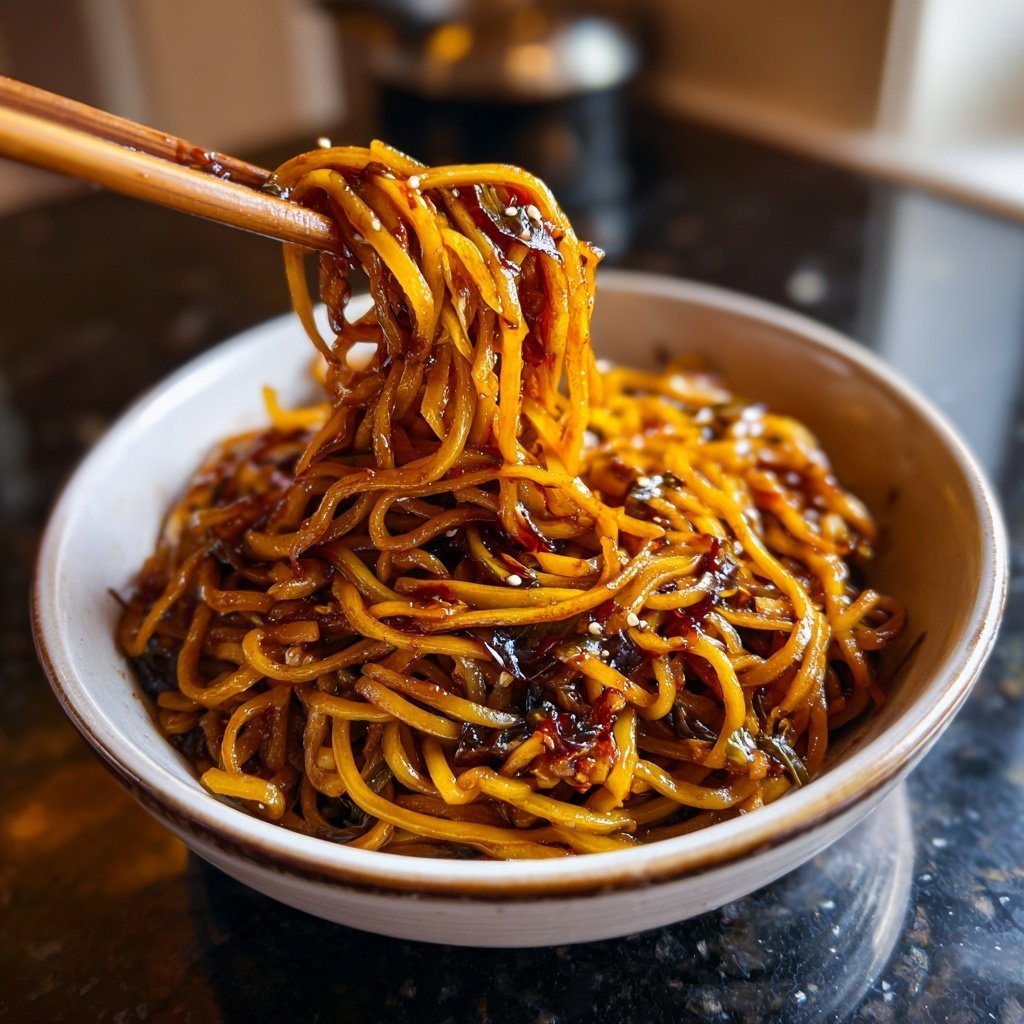
Jjajang is a popular Korean dish that combines chewy noodles with a rich black bean sauce. This dish is a staple in Korean cuisine, often enjoyed on special occasions or as a comforting meal at home.
Why You'll Love This Recipe
- Rich and savory black bean sauce that coats the noodles perfectly
- Customizable with your favorite vegetables and proteins
- A satisfying meal that brings a taste of Korea to your kitchen
The Origins of Jjajang
Jjajang, or Korean Black Bean Noodles, has a fascinating history that traces back to Chinese cuisine, particularly from the city of Zhuhai. This dish was adapted by Korean immigrants in the late 19th century and has since evolved into a beloved staple in South Korea. Over time, jjajang has become synonymous with comfort food, often enjoyed on special occasions or during family gatherings.
The dish is characterized by its rich black bean sauce made from fermented soybeans, which gives it a distinct umami flavor. This savory sauce is often paired with a variety of ingredients, including vegetables and meats, making it a versatile dish that caters to different tastes and dietary preferences.
Perfecting Your Jjajang Technique
When making jjajang, the key lies in mastering the sauce. The black bean paste (chunjang) is crucial; it should be sautéed properly to release its full flavor. Don't rush this step! Allowing the onions and garlic to caramelize slightly before adding the pork and vegetables enhances the overall taste of the dish.
Another tip for perfecting your jjajang is to ensure that your noodles are cooked al dente. This texture allows them to hold up against the thick sauce without becoming mushy. Rinse them briefly in cold water after cooking to stop the cooking process and prevent sticking.
Customizing Your Dish
One of the best aspects of jjajang is its adaptability. You can easily customize it with your favorite vegetables, such as bell peppers, carrots, or mushrooms. For protein, consider substituting pork with chicken, beef, or even tofu for a vegetarian version. This flexibility makes jjajang a great option for meal prep or to cater to different dietary needs.
Additionally, feel free to experiment with the spice level by adding a touch of gochujang (Korean chili paste) for some heat. This will not only enhance the flavor but also add a delightful kick that can elevate your jjajang experience.
Ingredients
For the Jjajang Sauce
- 1 cup black bean paste (chunjang)
- 2 tablespoons vegetable oil
- 1 onion, diced
- 2 cloves garlic, minced
- 1 zucchini, diced
- 1 cup pork belly, diced
- 2 cups water
- 1 tablespoon sugar
- 1 tablespoon soy sauce
For the Noodles
- 12 oz fresh or dried Korean wheat noodles
- 1 cucumber, julienned (for garnish)
- 2 green onions, sliced (for garnish)
Make sure to prepare all ingredients before starting to cook for a smooth cooking experience!
Instructions
Prepare the Noodles
Cook the Korean wheat noodles according to package instructions. Drain and set aside.
Make the Sauce
In a large pan, heat vegetable oil over medium heat. Add diced onion and garlic, and sauté until fragrant and translucent.
Add Pork and Vegetables
Add the diced pork belly and cook until browned. Then add the zucchini and cook for a few more minutes.
Combine with Black Bean Paste
Stir in the black bean paste, sugar, and soy sauce. Add water and bring to a simmer. Cook for about 10-15 minutes until the sauce thickens.
Serve
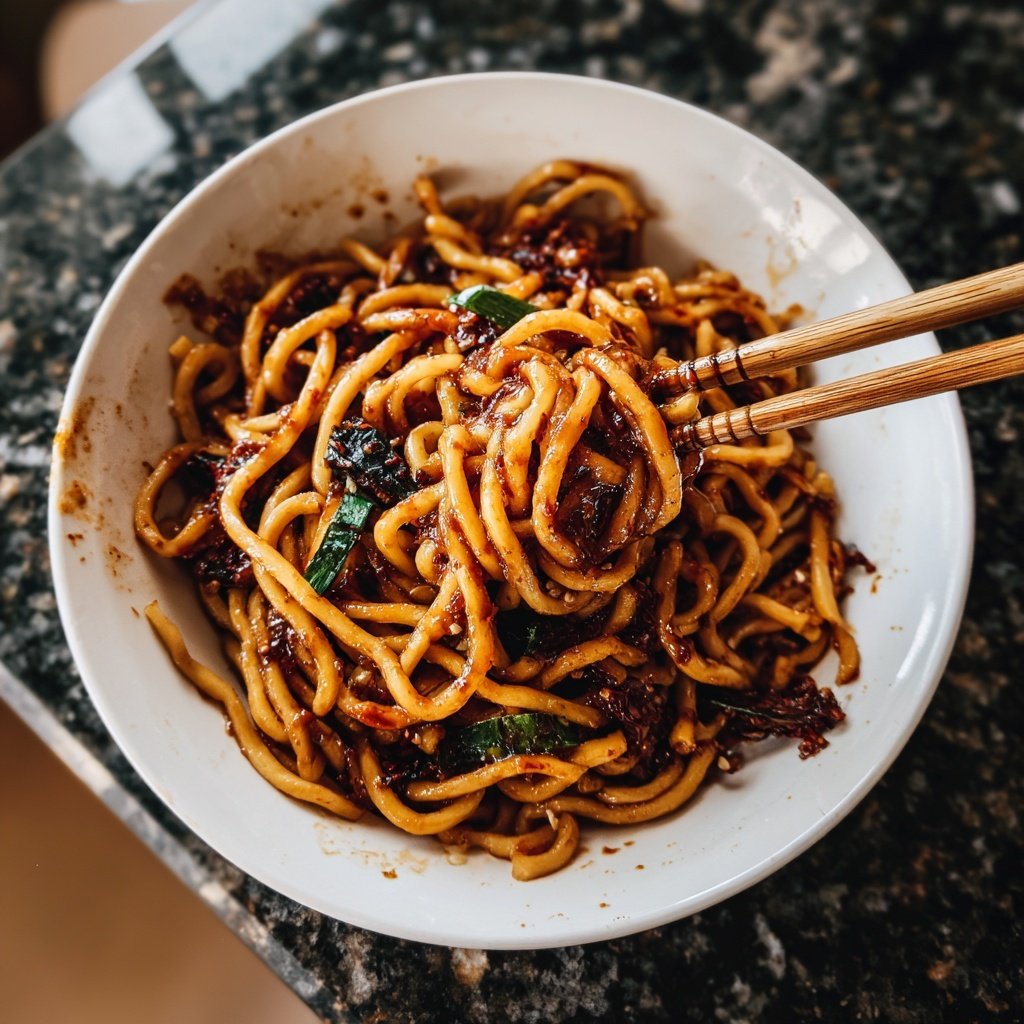
Toss the cooked noodles with the jjajang sauce until well coated. Garnish with julienned cucumber and sliced green onions before serving.
Enjoy your homemade Jjajang with additional pickled radishes on the side!
Pro Tips
- For a vegetarian option, substitute the pork with tofu and use vegetable broth instead of water.
Serving Suggestions
Jjajang is typically served with a simple garnish of julienned cucumber and sliced green onions, which add a refreshing crunch to the dish. You can also serve it with pickled radishes or kimchi on the side for a traditional touch. These accompaniments balance the richness of the black bean sauce and enhance the overall dining experience.
For a complete meal, consider pairing jjajang with a light soup or a fresh salad. This will create a well-rounded meal that highlights the flavors of the noodles while providing a satisfying variety.
Storage and Reheating Tips
If you have leftovers, jjajang can be stored in an airtight container in the refrigerator for up to three days. To maintain the best texture, store the noodles and sauce separately. When ready to enjoy, reheat the sauce in a pan over medium heat and toss it with freshly cooked noodles.
For meal prep, you can also freeze the jjajang sauce in portions. This allows you to quickly whip up a comforting bowl of jjajang on busy weeknights. Just remember to thaw the sauce overnight in the refrigerator before reheating for the best results.
Questions About Recipes
→ Can I make Jjajang in advance?
Yes, you can prepare the sauce ahead of time and store it in the refrigerator. Reheat before serving.
→ What can I substitute for black bean paste?
You can use fermented black beans or a mix of soy sauce and miso, though the flavor will differ.
→ How spicy is Jjajang?
Traditional Jjajang is not spicy, but you can add gochujang (Korean chili paste) for some heat if desired.
→ What type of noodles should I use?
Korean wheat noodles are ideal, but you can also use udon or spaghetti as a substitute.
Korean Black Bean Noodles Jjajang
Created by: The Foodspherehub Team
Recipe Type: Around World Recipes
Skill Level: Intermediate
Final Quantity: 4 servings
What You'll Need
For the Jjajang Sauce
- 1 cup black bean paste (chunjang)
- 2 tablespoons vegetable oil
- 1 onion, diced
- 2 cloves garlic, minced
- 1 zucchini, diced
- 1 cup pork belly, diced
- 2 cups water
- 1 tablespoon sugar
- 1 tablespoon soy sauce
For the Noodles
- 12 oz fresh or dried Korean wheat noodles
- 1 cucumber, julienned (for garnish)
- 2 green onions, sliced (for garnish)
How-To Steps
Cook the Korean wheat noodles according to package instructions. Drain and set aside.
In a large pan, heat vegetable oil over medium heat. Add diced onion and garlic, and sauté until fragrant and translucent.
Add the diced pork belly and cook until browned. Then add the zucchini and cook for a few more minutes.
Stir in the black bean paste, sugar, and soy sauce. Add water and bring to a simmer. Cook for about 10-15 minutes until the sauce thickens.
Toss the cooked noodles with the jjajang sauce until well coated. Garnish with julienned cucumber and sliced green onions before serving.
Extra Tips
- For a vegetarian option, substitute the pork with tofu and use vegetable broth instead of water.
Nutritional Breakdown (Per Serving)
- Calories: 600 kcal
- Total Fat: 20g
- Saturated Fat: 5g
- Cholesterol: 40mg
- Sodium: 800mg
- Total Carbohydrates: 84g
- Dietary Fiber: 5g
- Sugars: 6g
- Protein: 20g